Organic Certification for Farmers in Nepal
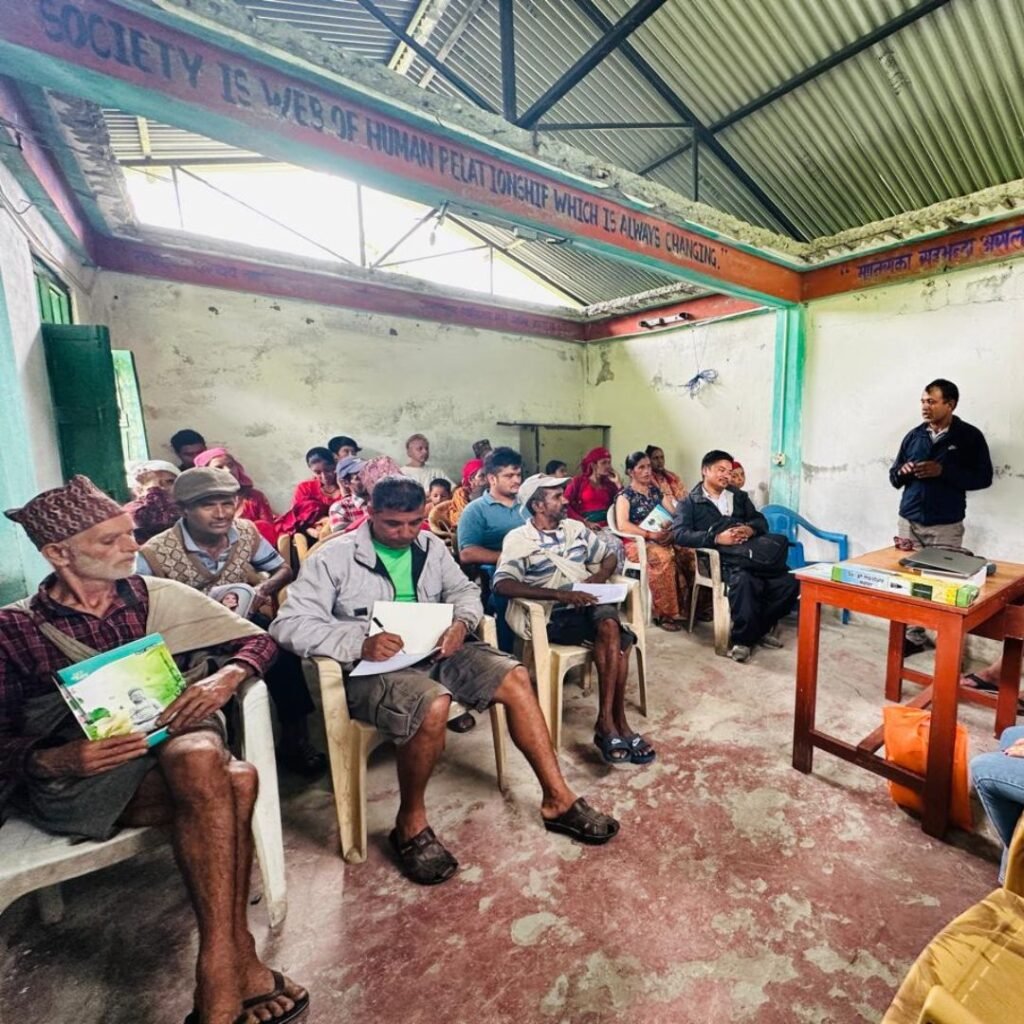
Helping Organic Farmers in Nepal Get Certified and Reach International Markets Farmers in the hills of Nepal grow some of the most distinctive spices in the region. Take timur, a relative of Sichuan pepper with a citrusy, slightly numbing bite. Much of it is grown with few or no chemical inputs, simply because farmers have never been able to afford them. On paper, that sounds like a ready-made organic product for buyers in Europe. In practice, very little of it gets there as certified organic. A buyer abroad needs more than good produce. They need a certificate, records showing where each batch came from, and lab results proving it is safe. Most smallholder farmers in Nepal have none of these. The GROWN Farm Incubator Foundation is working to change that. Why certification and traceability matter for smallholder farmers in Nepal Without certification, a farmer growing organically gets the same price as everyone else. Usually that’s whatever a local trader offers, since remote villages have few other buyers. Certification opens the door to premium organic markets, but it takes paperwork, inspections and costs that one small farm can’t manage alone. Traceability is becoming just as important. European buyers increasingly have to show where their products come from and that the farmers behind them were treated fairly. Produce that can’t be traced to a registered farm and a mapped plot is becoming harder to sell in Europe at all. So the gap isn’t really about farming. It’s about proof. Our work in Nepal aims to give smallholder farmers the systems they need to show buyers what they’re already doing in the field. Where we work and what farmers grow We work with smallholder farmer groups and cooperatives in three provinces: Lumbini, Karnali and Gandaki. Some are in remote areas such as Mugu in Karnali, where we’ve held farmer trainings. The main crops are timur, ginger, foxtail millet and beans. Spread across different climates, these give us spices, grains and legumes to work with, and several possible routes to export. Our first year: laying the groundwork In 2025 we focused on what has to come before certification. We identified farmer groups and cooperatives and started working with them. We also started registering farmers in GROWN ERP, our digital tool for farmer profiles and plot mapping. Every organic certification and traceability system needs to know who the farmer is and exactly where the crop was grown, so this record is the base everything else builds on. Finally, we found a site for a processing facility that will act as a quality hub. Produce will be checked, processed and packed there before it leaves for market. The path to certification and export: our plans for 2026 and 2027 Organic farming practices and inputs Certification depends on farm practices that can stand up to an inspector. We’ll train farmers in organic methods and supply quality seeds and organic inputs. We’ll also teach them to make bio-fertilizers from local materials, so they don’t depend on bought inputs that could put their organic status at risk. Support through organic certification For farmer groups that want to get certified, we’ll help them through the process. That includes keeping the records, preparing for inspections and meeting the standards international buyers recognise. Applying as a group makes the cost and paperwork manageable. Traceability from farm to consumer We plan to expand GROWN ERP into a full traceability system that follows produce from the field to the final consumer. We’re also designing NFC Farmer Cards, which would record the quantity sold and the price paid each time a farmer sells. Buyers get proof of origin and fair payment. Farmers get a clear record of their own income. Food safety and lab testing Organic produce still has to pass the food safety checks international buyers require. For each crop, we’ll map the processing steps and the points where quality can slip, and write practical manuals for cooperatives. We’ll also work with EU-certified laboratories to test products against European requirements. Processing and a central quality hub Buyers want clean, graded, well-packed products. In villages, we plan to equip cooperatives for simple processing, so more value stays with farmers and local jobs are created. Centrally, the quality hub will include a quality control centre and warehouse that meet international storage and quality standards. Alongside this, we plan to improve access to renewable-energy irrigation, so farmers can grow reliable volumes. That matters to any buyer planning long-term sourcing. Partner with us Getting Nepali smallholder farmers into international organic markets needs partners at every step. We’re looking for: If you’d like to work with us, write to info@grownfarmfoundation.org
Organic Farmer Field School in Malawi
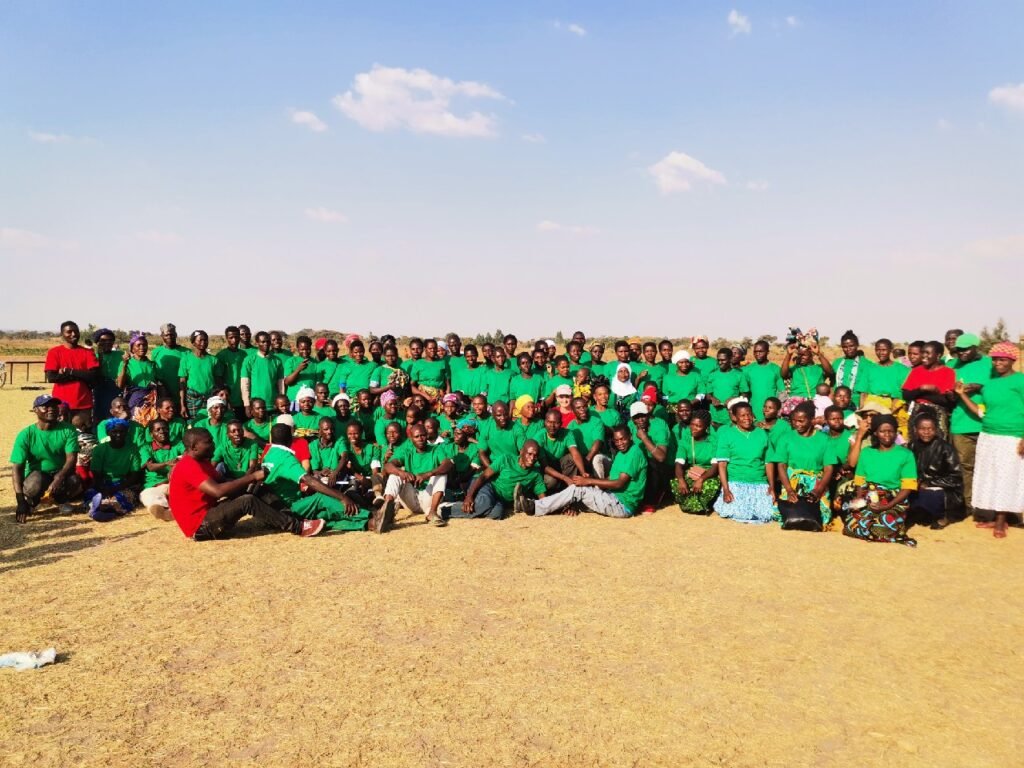
Organic Farming in Malawi Inside a Farmer Field School About 30 kilometres outside Lilongwe, there is a farm where the crops are only half the point. The other half is the farmers who come to watch, ask questions and try things with their own hands. This is the Organic Farmer Field School, run by the GROWN Farm Incubator Foundation. In 2025, more than 550 farmers from cooperatives across Central Malawi trained here. The school exists for a simple reason. Most smallholder farmers in Malawi have never been shown what organic farming looks like in practice, and few can afford to experiment on the land that feeds their families. Why organic farming matters for smallholder farmers in Malawi Smallholder farmers carry more climate risk than almost anyone. Rain comes late or all at once, droughts are more frequent, and one bad season can wipe out a harvest. Many soils are already worn out, and fertilizer keeps getting more expensive. Organic farming helps on both counts. Soil rich in organic matter holds water longer, which makes a real difference in a dry spell. Compost and biochar can be made from materials farmers already have, so they don’t have to depend on costly imported inputs. Certified organic crops also sell for a better price, as long as farmers can reach the buyers who pay it. That’s where the GROWN Farm Incubator Foundation comes in. We’re a Dutch non-profit that has been working since 2023 to help smallholder farmers switch to organic methods and then connect them with markets that reward the switch. What is the Organic Farmer Field School? A farmer field school is a working farm that teaches by example. Farmers don’t sit through lectures. They walk the plots, see the results and practise the methods themselves. At our school, training covers crop rotation and diversified cropping, agroforestry, sustainable water management, and making and using organic fertilizers. We also work with local organisations that run learning sites of their own. Each has trial plots for testing organic methods, crop varieties, ways to improve soil and irrigation set-ups. What we learn from these trials goes straight into the advice farmers receive, so our recommendations rest on what actually worked in Malawian soil. Making organic fertilizer from what’s already on the farm Getting enough good-quality organic fertilizer is one of the biggest obstacles to organic farming in Malawi, and much of our work over the past year went into solving it. In 2025 we ran compost trials, mixing dry biomass, green material and chicken manure in different proportions to find the best recipe. The trials produced 11 tons of compost, and 2 tons have already gone onto farmers’ fields. We also tested biochar. Groundnut shells are a common leftover in Malawi, and we turned them into biochar in metal drum reactors. That gave us 17.5 tons of biochar, with 5.3 tons applied on farmers’ plots. Biochar helps soil hold water and nutrients, and it stores carbon in the ground for many years. A bio-fertilizer facility next to the school We’ve finished the design for a dedicated bio-fertilizer facility next to the field school, and construction starts in 2026. It will have separate areas for liquid fertilizer, solid fertilizer, biochar and compost, along with space for preparing biomass, granulating and bagging. Solar panels and a water tower will run the site. Once it’s working, farmers nearby will have a local supply of organic fertilizer suited to Malawi’s main crops and soil types. Solar irrigation for year-round farming Organic farming still needs water, and so does fertilizer production. The same 550 farmers, from five cooperatives, also trained with us on solar-powered irrigation: how to schedule watering, how to maintain the system and how to use less water. At the school, we installed solar panels and inverters to run the pumps, repaired shallow wells, fixed leaking pipes and buried the distribution lines. Soil sensors now track moisture in the fields. A geohydrological survey has also mapped the best places for future boreholes. The payoff is large. Year-round irrigation can raise crop yields two to five times, because farmers are no longer limited to a single rain-fed season. Organic certification and access to premium markets Growing organically is one step. Getting paid for it requires certification. We’re currently supporting 220 groundnut farmers from the Mnjanja cooperative through the organic certification process. If they succeed, they will be among the first certified organic groundnut farmers in Malawi. We work with EU organic certification bodies to make the same route available to more farmers. Certification also depends on the right seed. Through our partnerships with ICRISAT (the International Crops Research Institute for the Semi-Arid Tropics) and IITA (the International Institute of Tropical Agriculture), farmers can get untreated, non-GMO seed that meets organic standards. What’s next: our plans for 2026 and 2027 Over the next two years we’ll build on what the school has already tested: More bio-fertilizer: the new facility will scale up production, with hands-on training so farmers know how and when to use it.Agroforestry: we’ll encourage farmers to plant trees that improve soil fertility, support biodiversity and shade crops.Comparison plots: conventional and organic plots side by side, so farmers can see the difference before changing their own fields.More certified crops: certification support for value chains beyond groundnuts.A processing and warehouse hub: a central hub at the same site for groundnuts, dried fruits and bird’s eye chilies, so farmers can meet buyers’ quality and traceability standards. We’re also studying whether biochar can earn carbon credits. If it can, that income would help pay for training more farmers in the years ahead. Partner with us Our goal is to bring 100,000 smallholder farmers into responsible value chains over the next ten years, with every one of them earning a living income. We can’t do that alone, and the next stage in Malawi offers clear ways to get involved: Buyers looking for traceable, organically grown groundnuts, dried fruits or chilies from MalawiOrganisations with CSR or development funding that want to